Trust, Truth, and the Future of News
Reflections from the 2025 Socrates Seminar
By Alexander Plimmer, Socrates Seminar Youth Scholarship Recipient 2025
Former President and CEO of the Aspen Institute, Walter Isaacson, remarked at the Institute’s 75th anniversary gala earlier this year that it is in the commons that humanity remains connected, and that it is there we find a place for open dialogue, the willingness to listen, and the courage to disagree.
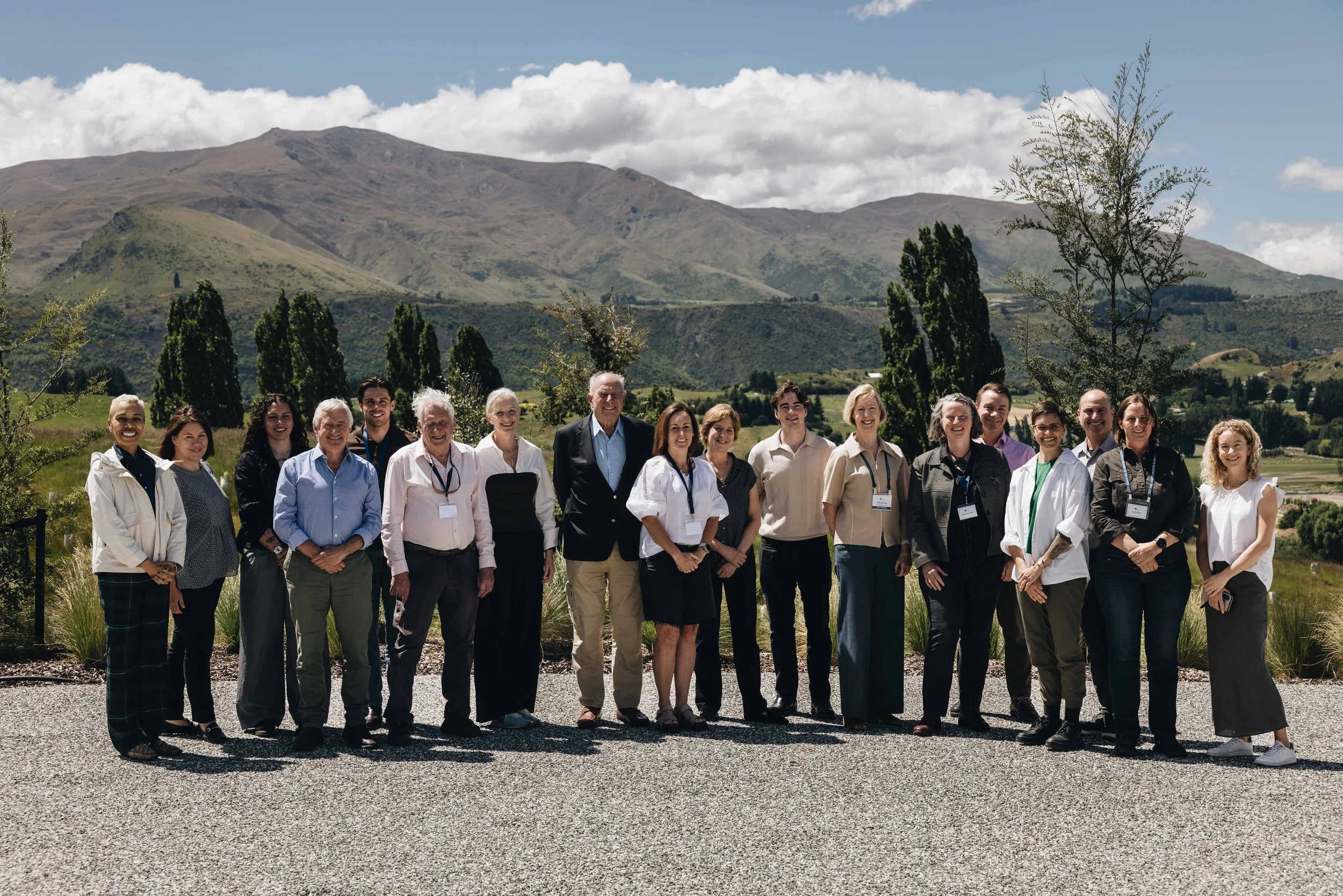
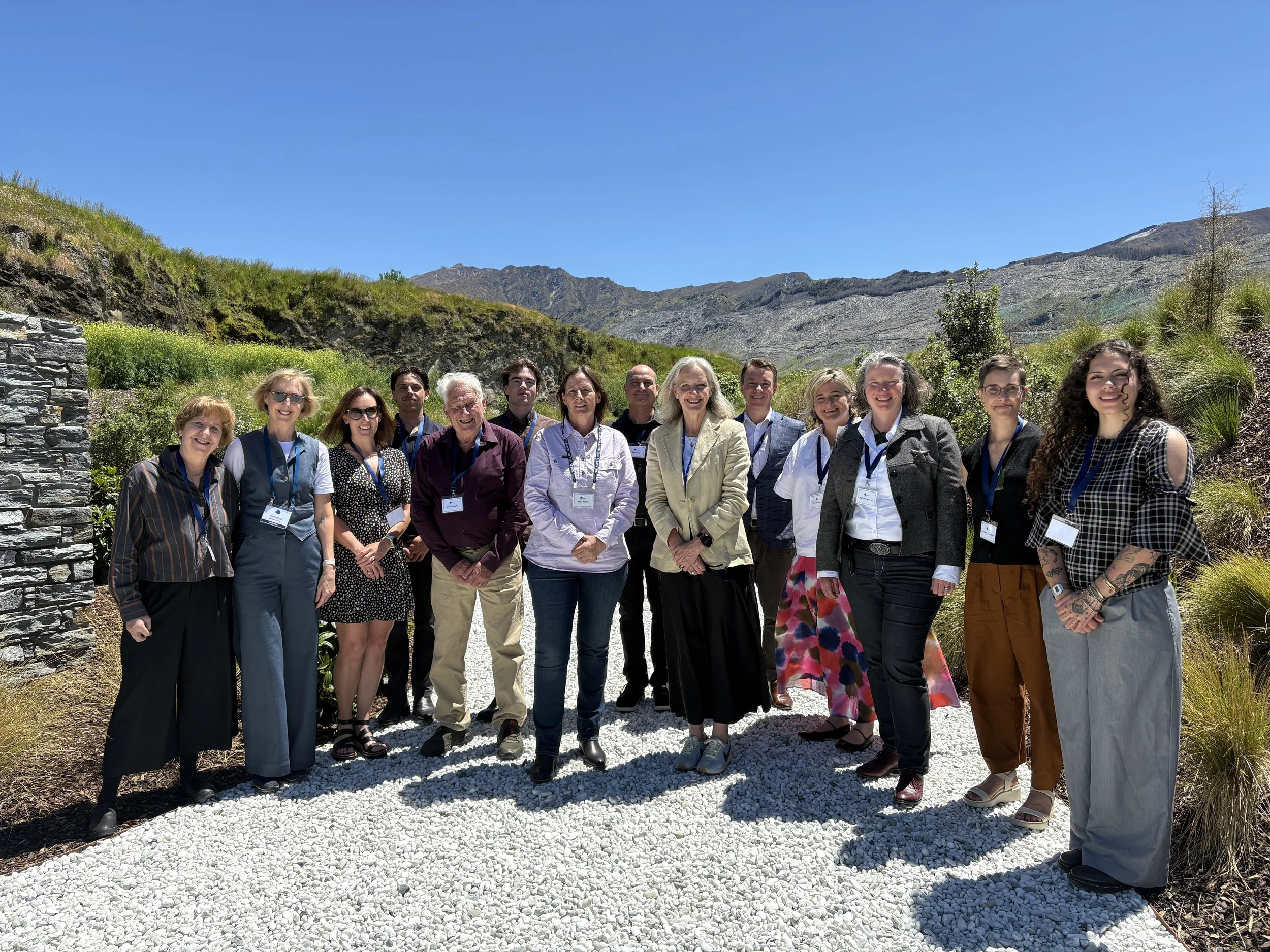
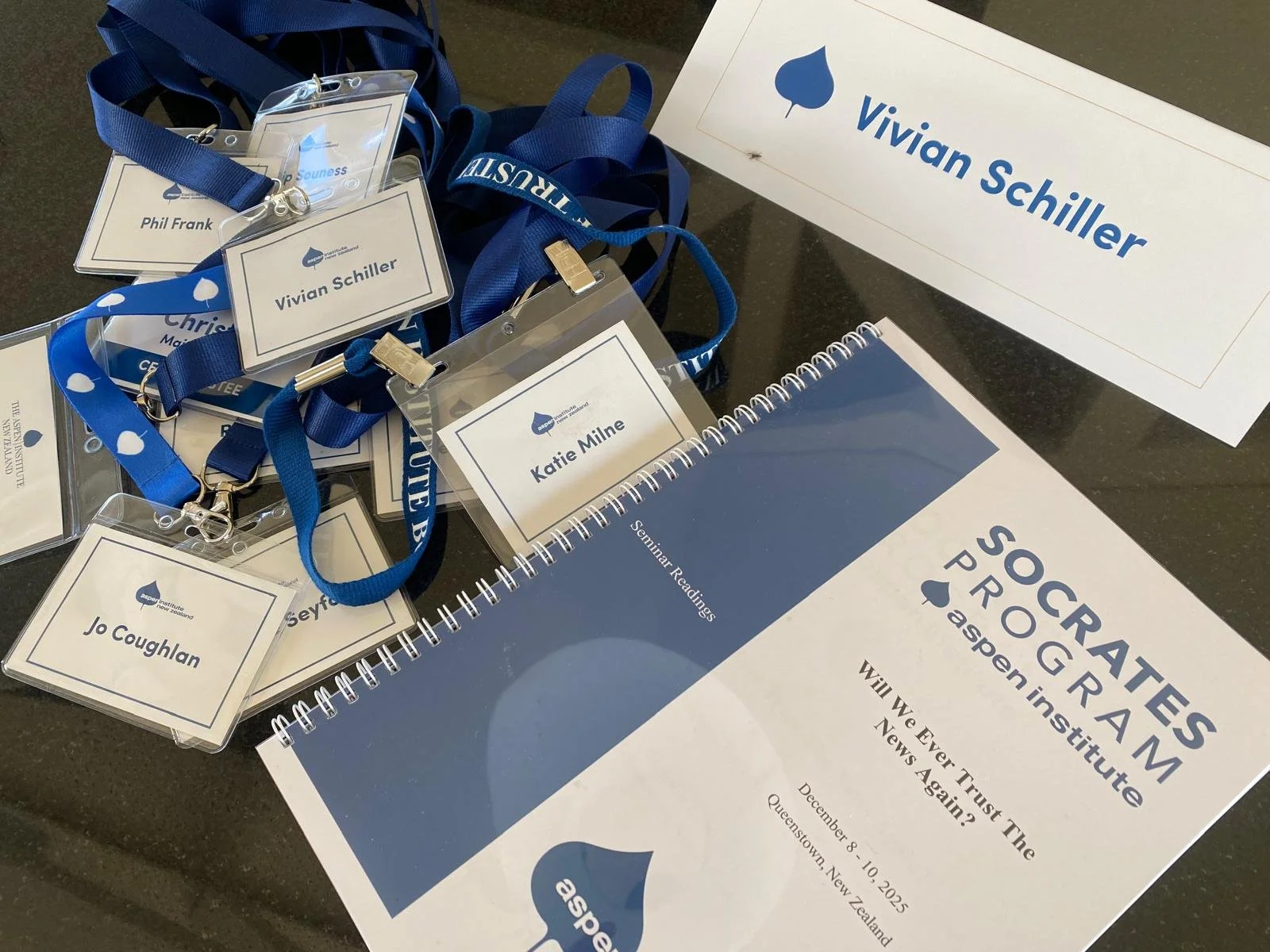
As a scholarship recipient, I recently had the privilege of attending the Aspen Institute New Zealand’s Socrates Seminar on ‘Will We Ever Trust The News Again’. Set against the remarkable backdrop of Queenstown, this opportunity brought together an exceptional group of individuals from across New Zealand and the wider international Aspen community for a three-day forum. Together, we were challenged to consider how we might navigate a world marked by declining trust in the news, deepening social divides, and increasingly fragmented information bubbles; trends that ultimately threaten the commons itself.
Throughout the seminar we engaged in a series of interactive roundtable discussions moderated by Vivian Schiller, Director of Aspen Digital and a longtime journalism and media executive. The programme was structured across three core sessions in which different topics of focus were prompted, and discussion followed.
The first day focused on the State of the Media in 2025. We unpacked the fragmented information landscape, examined the role of legacy media, and explored how the consumption of media differs across generations and platforms. From this broad framing, discussion then narrowed to local news and the challenges that are facing this sector, whilst considering the civic implications of news consumption and fragmentation.
Session II centred on the role of objectivity and the importance of truth. We discussed the challenges of content moderation, “free speech”, and the distinction between trust and trustworthiness. Discussion turned to the media’s responsibility when confronting falsehoods, and the perverse incentive structure that rewards sensationalism and allows for the propagation of such falsehoods or misleading news. These dynamics help to fuel polarization and undermine the journalistic dogma of “comforting the afflicted and afflicting the comfortable.”
The final session of the Socrates Seminar explored the future of information and adapting to the era of artificial intelligence. We questioned how AI will reshape journalism and how it can be utilized in a way that enhances, rather than erodes, the quality and credibility of news. Particularly striking was the discussion around the fragmentation of a shared reality, an environment in which citizens no longer rely on an agreed upon set of facts when making decisions that affect us all. This raised fundamental questions about how we identify trustworthy information that is rooted in evidence-based reality in an era where we seem to be straying further from this consensus.
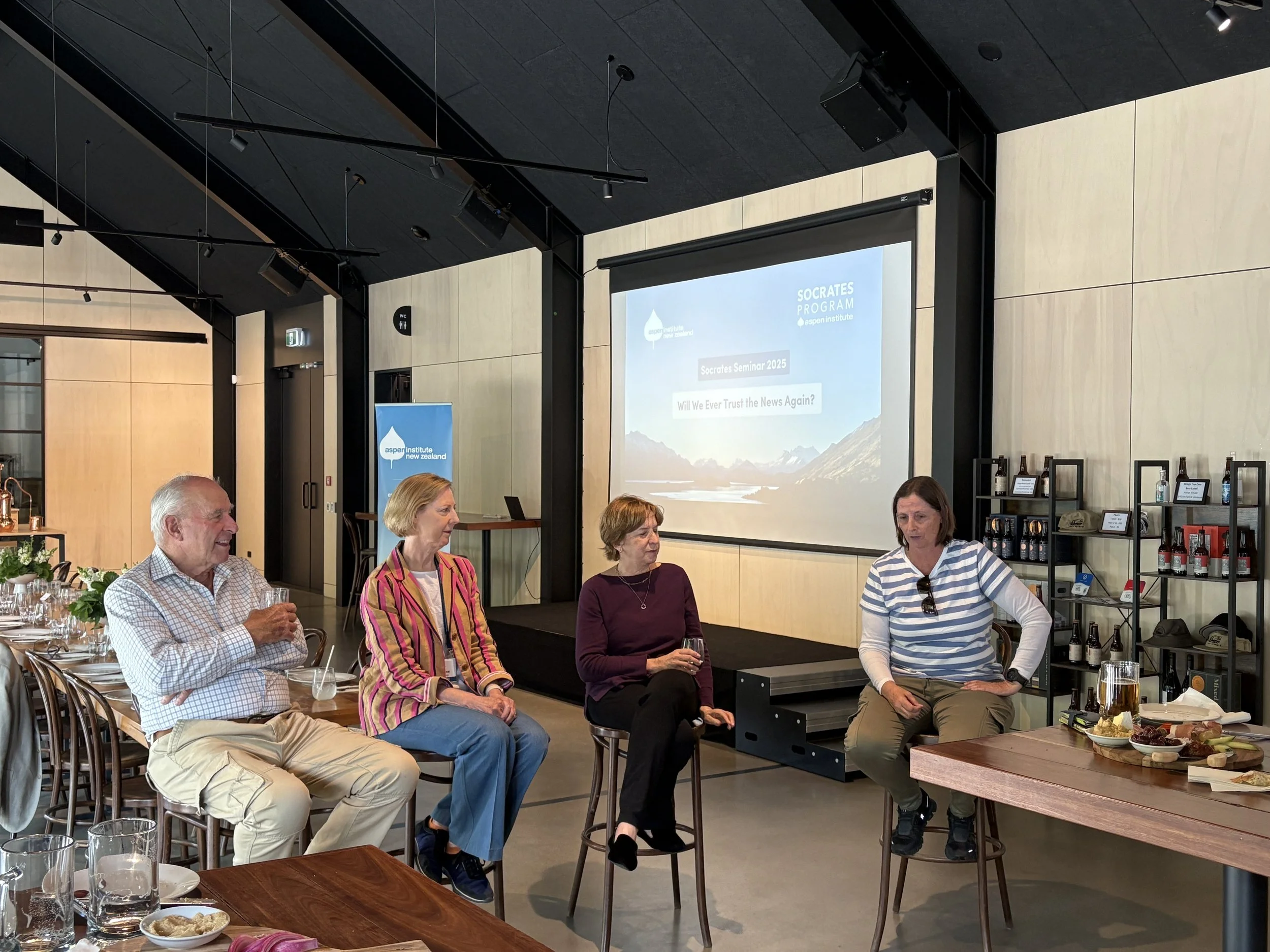
Over the course of the seminar it became clear just how complex and rapidly evolving the challenges of the information ecosystem are. The influence of the media and the news is profound; it is how societies understand reality, form shared values, and frame public discourse. To quote Tom Rosenstiel, the purpose of journalism, and the news as an extension of that, is to “provide citizens with the information they need to make the best possible decisions about their lives, their communities, their societies, and their governments.” And so, the most pressing question is: what happens to a world in which we do not have a foundation of agreed-upon facts, and how can businesses, communities, and democracy itself, remain steadfast when the relied upon institutions are transforming.
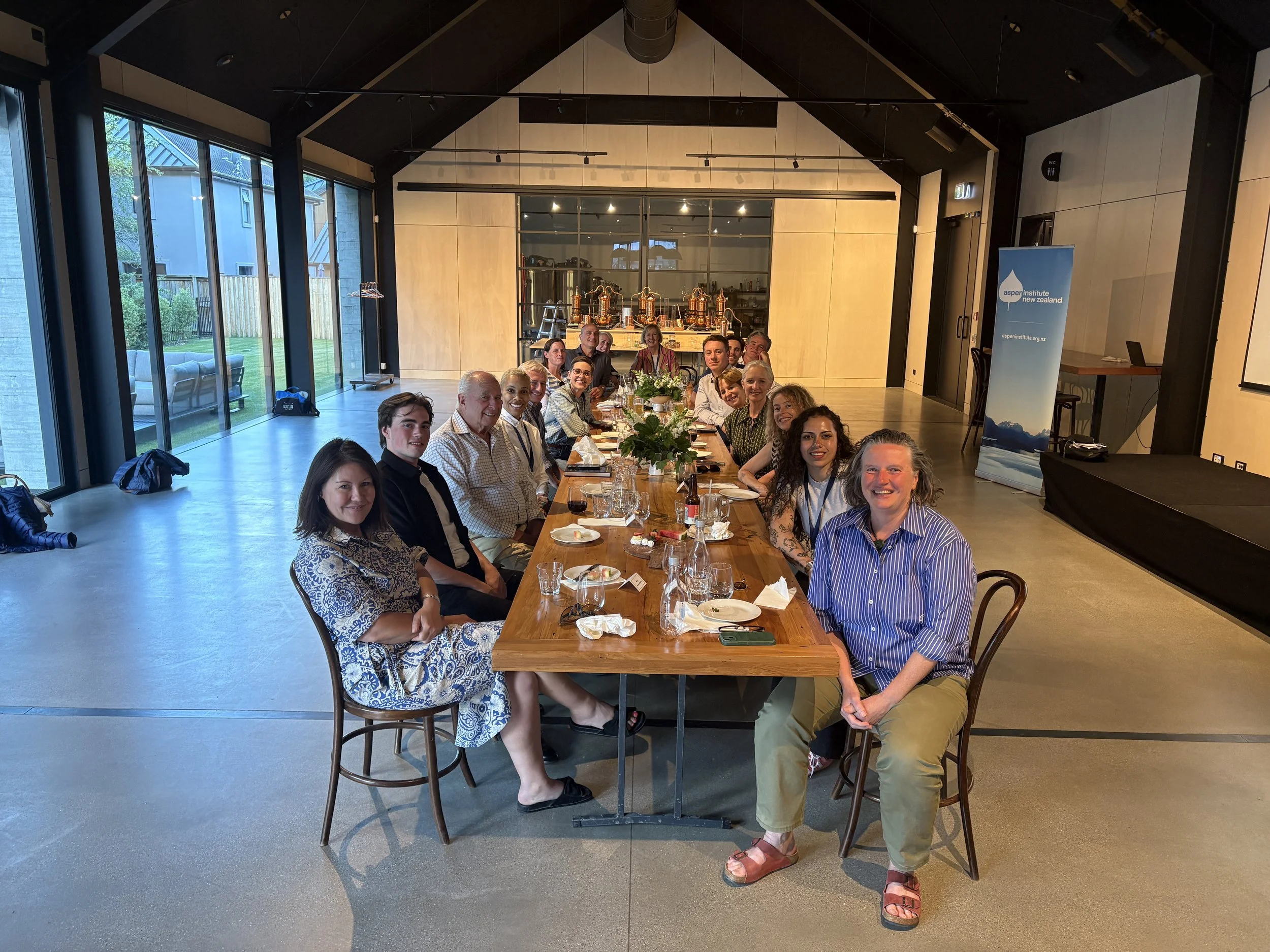
I took immense value from the experience, and found it deeply reassuring to see the collective stewardship of our nation expressed through open dialogue that spanned generations and careers. Beyond the formal seminars, the moments in-between (often stretching further than the allotted time due to the richness of conversations that were struck up), and the beautiful dinners shared, provided invaluable opportunities to learn from the lived experiences of some of New Zealand's biggest contributors. This included academics, journalists, diplomats, and all-round great people, who were always more than happy to share advice, insights, and impart wisdom; in doing so creating a space in Aspen that is rooted in curiosity, generosity, and a shared commitment to Aotearoa.
I am incredibly grateful to Christine Maiden Sharp and Aspen New Zealand for the opportunity to listen, learn, and engage in such thoughtful and relevant discussion. What happens to information shapes and impacts all that happens in the world, and I look forward to taking what I have learnt back to my work and to my community. As these conversations continue, I hope to sustain a space grounded in truth, open dialogue and shared understanding, as the information landscape, and the society that it shapes, continues to develop.
Alexander Plimmer is a Wanaka local, working at BDO Southern Lakes and Central Otago in Business Advisory Services. Alex majored in Political Science at Slippery Rock University of Pennsylvania, and went on to complete a Master of Business Administration from Fort Hays State University in Kansas in 2023, where he was also a student-athlete competing in collegiate soccer. Since working with BDO, Alex has become increasingly interested in how legislation, institutions, and the functions of the state contribute to the success and well-being of our community, and how an analytical approach can drive progressive policy. Alex was one of three youth scholarship recipients for the 2025 Socrates Seminar.