
Improving the Way We Decide
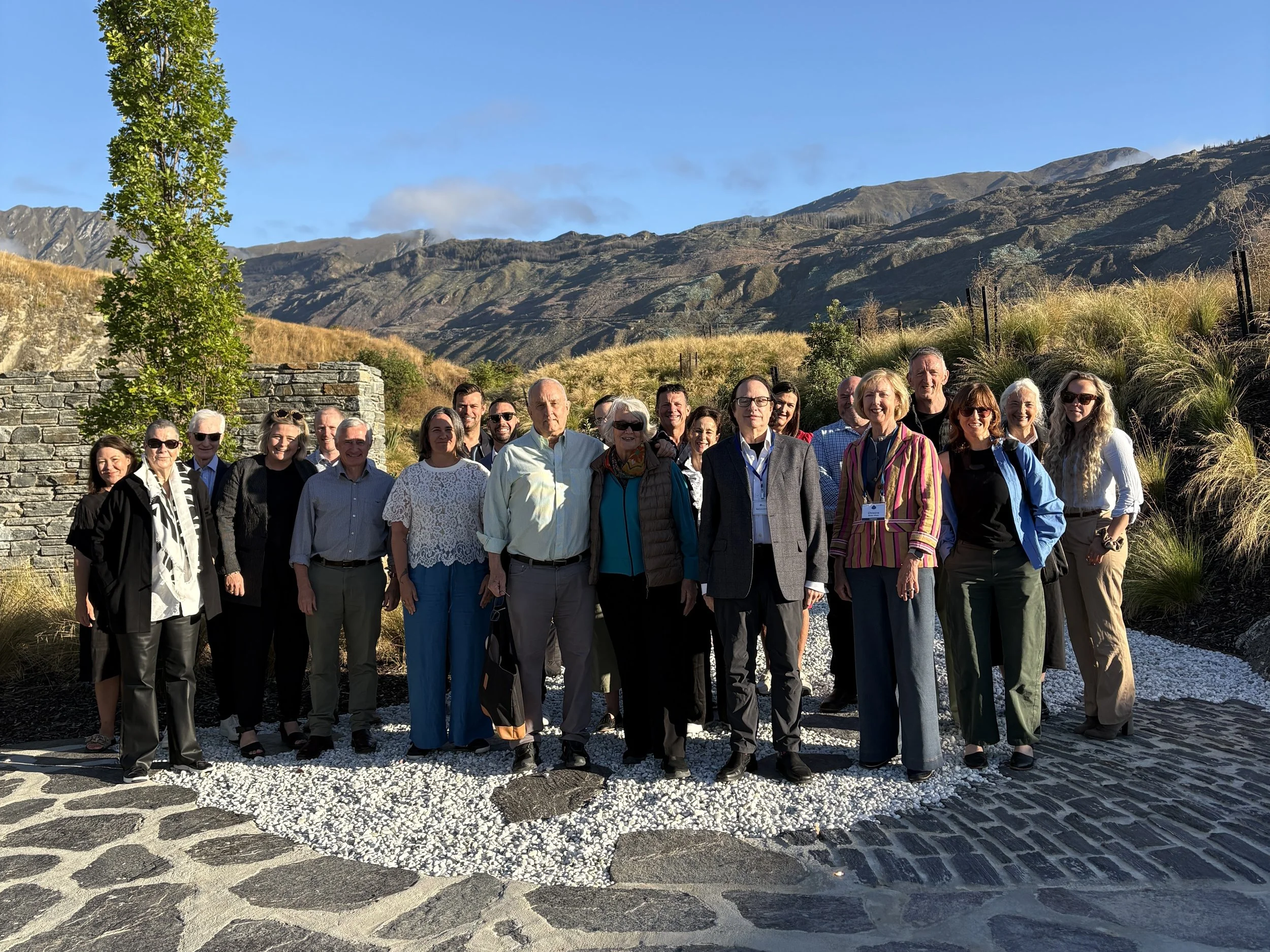
Leaders from across business, government, and community sectors gathered at Taramea in Queenstown for Aspen Institute New Zealand’s Debugging Decision Making roundtable, a day focused less on the decisions leaders face and more on how decisions are made, and the quality of the thinking behind them.
Moderated by Neil Jacobstein, Director of Aspen NZ, the discussion created the conditions for a candid and constructive exchange, where diverse perspectives could be tested without judgement. As one participant reflected, “Neil was an outstanding leader of the conversation, gently steering the discussion without judgement and allowing the participants, who had a very diverse range of views, to contribute and feel their opinion was truly valued.” Within that environment, the conversation explored a deceptively simple premise: if we improve the way we make decisions, better outcomes tend to follow.
Throughout the day, participants examined how evidence, values, and uncertainty intersect in complex environments. As one participant reflected, quoting Bertrand Russell, “The whole problem with the world is that fools and fanatics are always so certain of themselves, and wiser people so full of doubts.”
Certainty, the group noted, is often elusive. Facts evolve, models improve, and what feels settled may later require revision. Science and data are powerful tools, yet they are human-driven processes, strengthened not by rigidity but by scrutiny and revision.
The conversation then turned to identity and group dynamics. Under pressure, even experienced leaders can default to defensiveness or overconfidence. Self-awareness matters, but it is not enough; effective decision-making depends on processes designed to surface blind spots and challenge assumptions before consequences unfold.
Common patterns of decision error were discussed, from sunk costs to misaligned incentives. These were not abstract ideas but familiar dynamics across boards, organisations, and public institutions. Gradually, the focus shifted from individual capability to systemic design: how structures, culture, and clarity of roles shape collective judgment.
One insight that resonated concerned responsibility. When making consequential decisions, what happens to the team if the outcome is poor? Decisions rarely affect only the person who makes them; their impact travels.
An analogy offered during the discussion captured the governance dimension succinctly. Decisions were compared to hats, haircuts, and tattoos. Some are temporary, some grow out, and some are permanent. Too often, boards spend time debating haircuts, when their role is to focus on the tattoos. Clear decision rights and an understanding of consequence matter.
The discussion was robust and thoughtful throughout. Participants challenged one another constructively, exploring both what they believed and how they arrived at their beliefs,
At its core, the roundtable reinforced a simple but demanding discipline: better decisions require clarity about evidence, honesty about values, and deliberate processes that withstand pressure. Strengthening that discipline is central to the kind of leadership needed in complex times.
Debugging Decision Making is a one-day roundtable, designed to help leaders improve their decision outcomes. If you, or your organisation would like to attend the next intake, please contact us to enquire.