
The Long Game: New Zealand Business and the India FTA
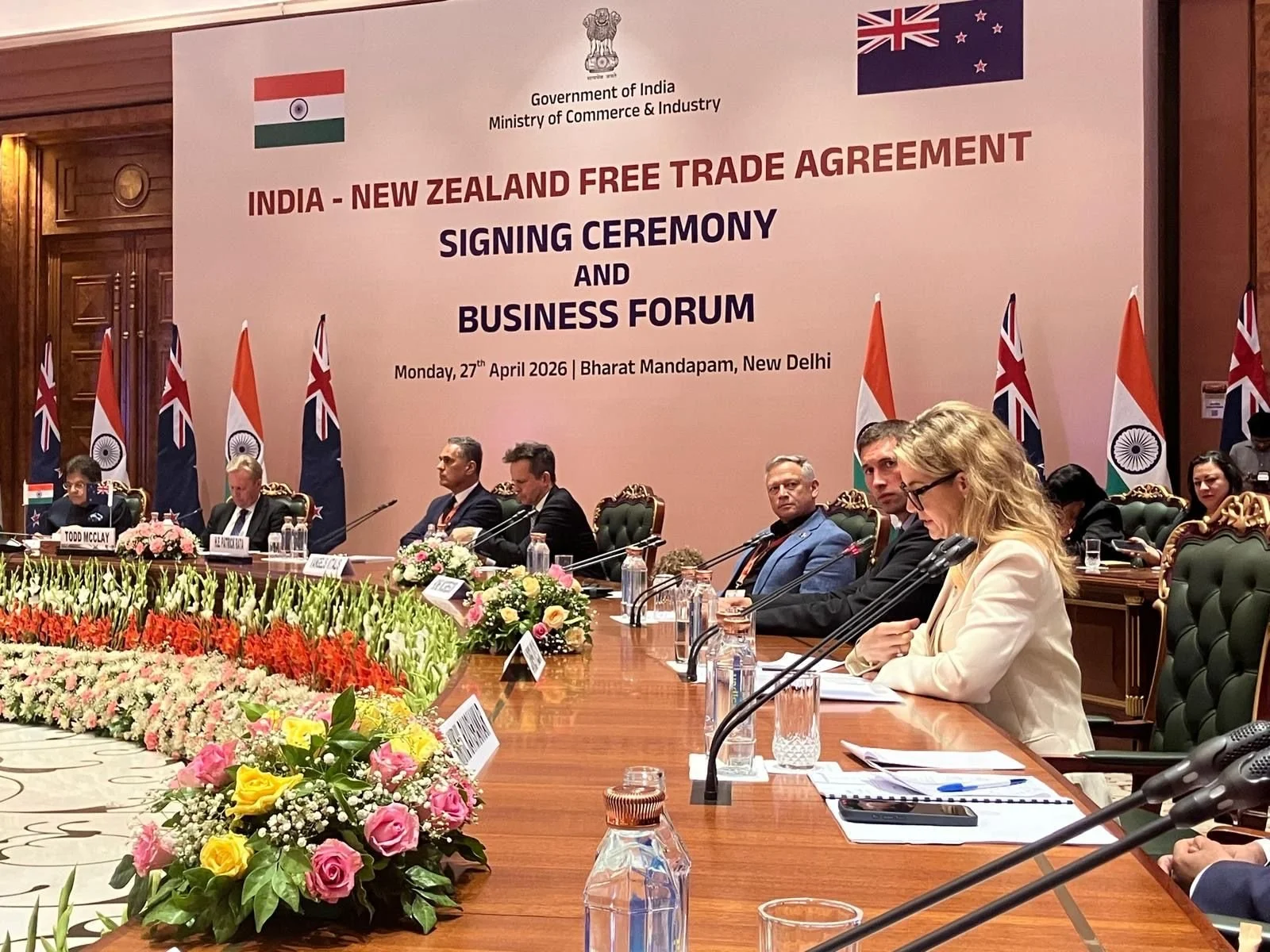
The signing of the New Zealand-India Free Trade Agreement on 27 April 2026 marked the conclusion of negotiations that had eluded both governments for decades. Completed in nine months, the agreement covers 95% of New Zealand exports to India, opens 118 services sectors, and includes practical customs improvements that reduce the complexity of exporting to India. For sectors including horticulture, technology, fintech, dairy ingredients, and professional services, it changes the commercial equation, making India an attractive and more accessible market to pursue.
India's economic scale makes the timing significant. Its GDP grew 6.5% in the last financial year, maintaining its position as the fastest growing major economy in the G20. Measured by purchasing power parity, which adjusts for cost of living, it is already the world's third-largest economy, behind only the US and China. For New Zealand, whose two-way trade with India represents less than 2% of total exports, the gap between what the relationship is and what it could be is significant.
At the same time, many New Zealand businesses are navigating a more uncertain global environment. Familiar markets have become less predictable, and the case for diversifying trade relationships has strengthened. The FTA with India offers a concrete pathway, although market access and market success are different things. The businesses that have built successful operations in India are consistent in their advice: the country rewards long-term commitment, the right local partnerships, and a willingness to invest in relationships before expecting commercial returns.
Sir Anand Satyanand, Honorary Advisor to the Asia New Zealand Foundation, Aspen NZ moderator and member of the Community Delegation accompanying the New Zealand Prime Minister's visit to India in 2025 writes:
“The signing of the Free Trade Agreement between India and New Zealand, represents a major step forward in the connection between the two countries. Ties of sentiment, sport and common colonial history, have matured into a 1373 page formal document, placing on record, in its recitals at the outset, the background and basis of a new agreement … the FTA is literally a new dawn brought into being by the actions of diplomats, negotiators, politicians and representatives of business and the community- on both sides. The challenge to make it all work now rests with business people in India and New Zealand.”
This report brings together the insights of practitioners who have operated in the Indian market, alongside a breakdown of what the FTA contains and a practical guide for businesses considering India as an export market. It is produced by Aspen Institute New Zealand, which has hosted a series of forums on the NZ-India relationship since 2023 in partnership with the Ananta Aspen Centre in New Delhi.
Download the full report below.
