
Decision Making in an Age of AI
Lessons from the Global Changemakers Workshop 2026
By Arne Larsen, Aspen NZ Global Changemakers Scholarship Recipient 2026
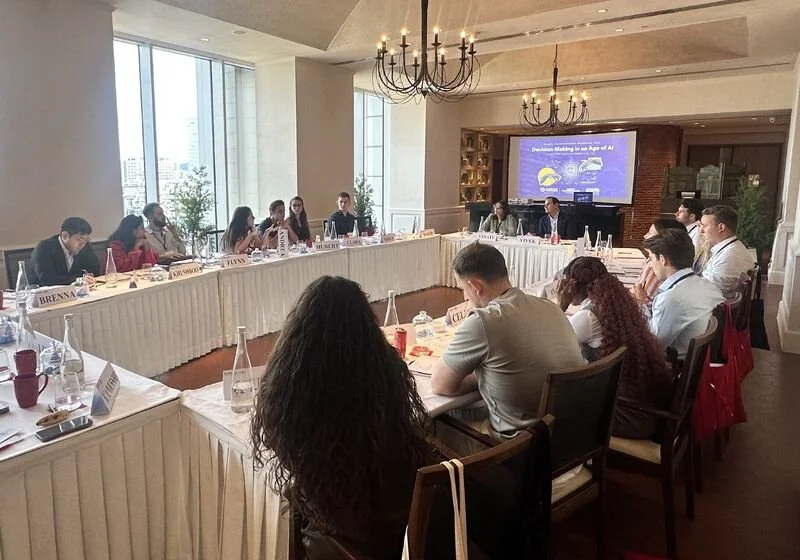
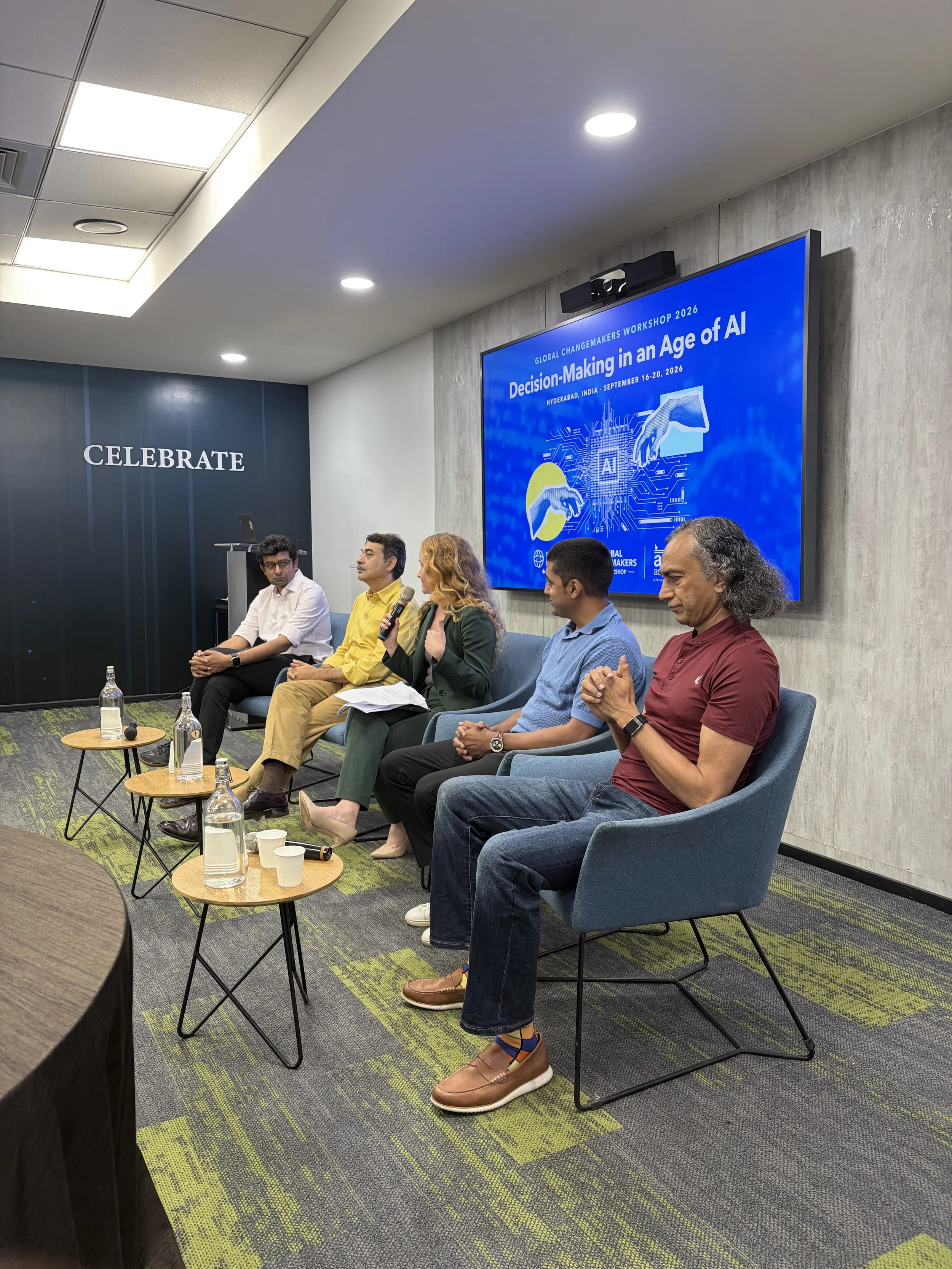
In September, I had the incredible privilege of representing New Zealand at the Global Changemakers Workshop in Hyderabad, hosted by the Ananta Aspen Centre and Aspen International Partners. The workshop, titled Decision-Making in an Age of AI, brought together a remarkable group of young leaders from a range of disciplines from all around the world to engage in thought-provoking discussions and share diverse perspectives on the pressing impacts of AI. Rather than focusing solely on the technology itself, the discussion challenged us to think about the broader societal questions AI raises.
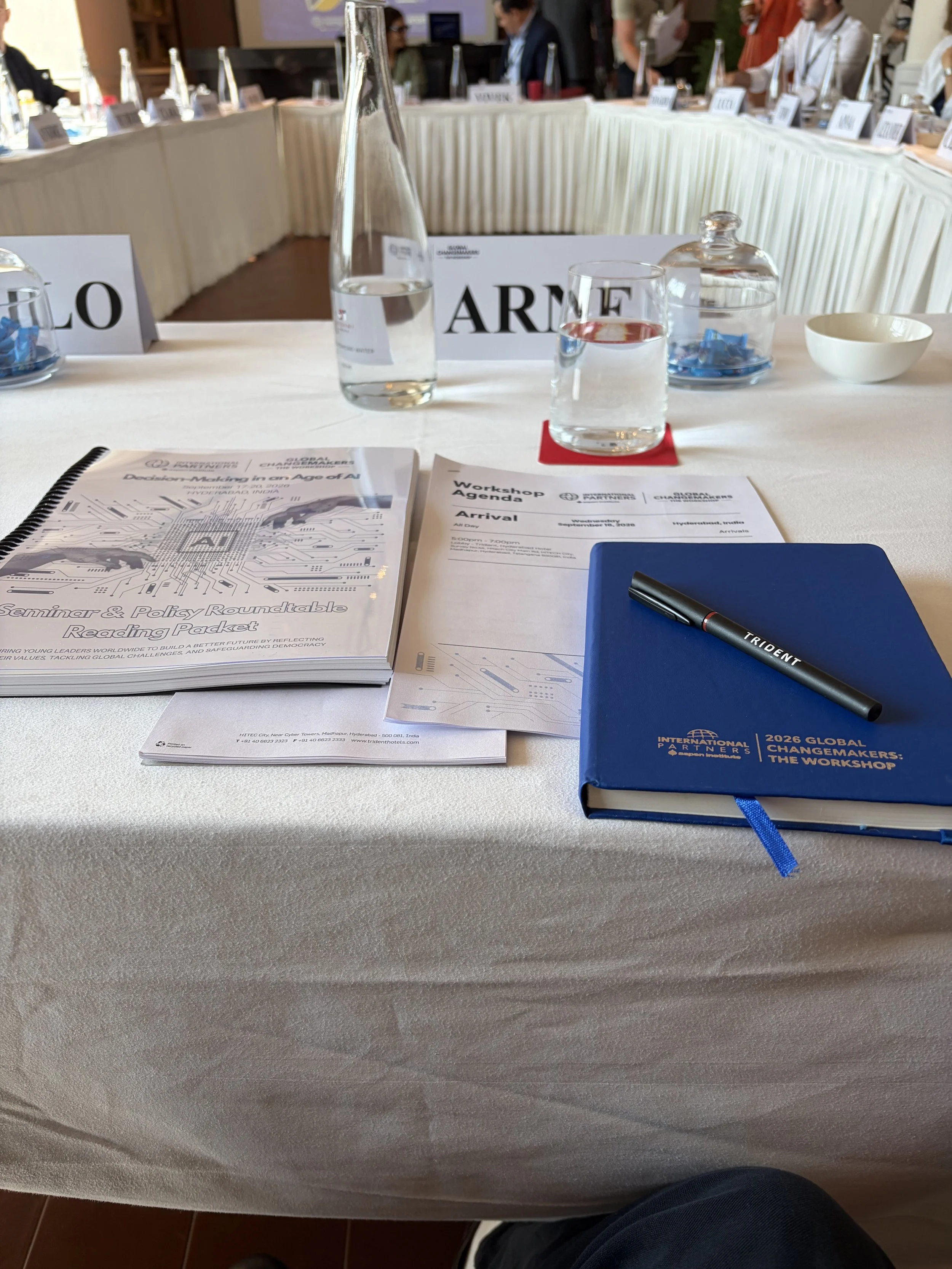
The workshop began with two seminar sessions that immediately challenged our assumptions and set the foundation for meaningful connections within the cohort. The carefully curated collection of readings, from Plato to Ursula Le Guin, were incredibly thought provoking and had some extremely relevant parallels to the current AI race. The discussions delved into questions of justice, ethical consumption, and the difficult trade-offs that leaders are often required to make. These readings acted as an incredible starting point for deeper discussions and collaborative work that followed throughout the workshop.
The New Infrastructures of Power
The first policy roundtable began by exploring AI at a foundational level, including those who are driving the development of AI and how it is reshaping power dynamics around the world. The roundtable sought to answer who AI should be for? Should AI be considered infrastructure, and if so, what sort of obligations (including universal access) can be imposed on it? Where does power concentrate across the AI stack, and who benefits?
A recurring theme throughout the discussion was the growing reliance on AI systems, which is equally relevant to New Zealand. As the models continue to be developed and capabilities increase, the opportunity for them to have a positive impact on our lives will also continue to increase, and thus they will be used more and more. Several key themes that emerged from the workshop, including AI's ability to reduce uncertainty and generate increasingly accurate predictions. While this offers significant opportunities, it also prompts deeper questions: do we want a future that becomes increasingly predictable? Who stands to benefit from a more predictable future? How will the private companies who design these AI models stand to profit in the long term?


AI in Society: Institutions, Work, and Access
The second policy roundtable explored the integration of AI across sectors, and implications across economies, institutions and society. This discussion felt particularly relevant from a New Zealand perspective, where conversations about AI’s impact on the workforce and some consequences that may be experienced in the tax system. As AI systems impact human jobs, governments will need to find other revenue to mitigate the loss of taxes.
One of the major themes that came up was that as AI becomes increasingly central to education, employment, and innovation, disparities in access may risk reinforcing existing social and economic divides. Similarly, AI developed to solve problems in different contexts may cause harm in countries who do not have those same problems, for example an AI developed to support jobs in an aging population would put people out of work in a growing population. Other takeaways included how can talent continue to be developed as roles are replaced by AI? How can we ensure we keep individual opinions and not lose critical thinking as a skill?
AI, Security and Strategic Competition
The third policy roundtable discussed the growing role of AI in national security, and some of the consequences for conflict, state power and geopolitical competition. This extends not only traditional forms of state conflict, but also the nature of crime, cyber threats, and strategic competition between nations. Some trends identified by the group include the importance of supply chains, as states are more and more friendshoring critical supply chains.
AI leads to faster decision making in a military context, and one of the key concerns is that these quicker decisions may also lead to a faster escalation in conflict. One recent example of this was the recent case between the US and China, where a report generated with the help of AI inaccurately identified material carried by a Chinese ship, which nearly led to the US military engaging the vessel. As governments continue to integrate AI into security and defence systems, ensuring appropriate safeguards, accountability, and human judgement will be critical.
Guardrails, Governance, and the Future of Human Agency
The final policy roundtable focused on the governance and oversight of AI, including who should have accountability, regulation and control over AI systems. One of the big concerns was that any meaningful regulation would likely only occur following a major crisis. While many people are discussing changes at a policy level, it is likely that institutions will need to change and be optimised around the regulation and governance of AI.
The difficulty is finding what particular levers there are for governing the AI stack, particularly after already relying on AI across our society. Levers could include using the markets, coordinating frameworks between likeminded countries, and more participatory models such as global citizens' assemblies. Ultimately, the principles for how states use AI will need to be developed, ideally through engagement with their populations.


Policy Simulation
The workshop closed with policy simulation, where the organisers did an exceptional job in creating the story of AI in a realistic and dynamic scenario, to navigate the opportunities and risks presented by AI in a complex real-world setting. I was assigned the role of an investigative journalist, which gave me the opportunity to examine the decisions being made by various stakeholders, and what information those decisions were made based on. It was an engaging and thought-provoking experience that highlighted how information, incentives, and decision-making interact during periods of uncertainty and rapid technological change.
As with previous Workshops, this year the cohort got to experience many amazing experiences outside of the formal sessions. These included tours of some of Hyderabad's landmarks, including the Taj Falaknuma Palace, Golconda Fort, Micron Technology and T-Hub. These excursions provided an opportunity to learn more about both the past and future of Hyderabad. This experience also allowed me to build friendships with an amazing group of people from around the world.
I am incredibly grateful to both Aspen Institute New Zealand and Aspen Institute International Partners for this opportunity to participate in this workshop. I would also like to thank Ananta Aspen Centre for the spectacular job in hosting the event, as well as all of the incredible moderators who joined us for this dialogue. Finally I would like to thank my amazing cohort, you are all incredible and I am so happy to have met you all.